
Overloaded Achilles Tendon: Understand the Pain and Learn How to Treat It
The Achilles tendon (or calcaneal tendon) is the strongest and thickest tendon in the human body. It has the noble mission of supporting body weight and propelling the stride during walking and running. But when pushed beyond its limits, it also "complains".
Pain in this tendon is one of the most frequent complaints among long-distance runners and those who practice jumping sports. If not treated early, what starts as morning discomfort can become a chronic injury that's difficult to resolve.
What is Achilles Tendinopathy?
Previously called "tendinitis," today we use the term tendinopathy because the problem is not always just inflammation. Often, there is a process of degeneration and disorganization of the tendon fibers.
This happens when the tendon's ability to adapt to load is exceeded. A cycle of micro-injuries occurs that the body cannot repair in time before the next training session, leading to pain and loss of function.
Warning Signs: How to Identify?
Achilles tendon pain usually has a very characteristic pattern:
- Morning stiffness: you wake up and feel the tendon "locked" or sore in the first steps, but it improves after walking a bit.
- Pain at the start of training: you start running and it hurts, but it "warms up" and eases.
- Post-effort worsening: hours after training or the next day, the pain returns stronger.
- Tenderness to touch: pressing the tendon (usually about 2 to 6 cm above the heel) causes pain.
- Swelling or thickening: in more advanced cases, a lump or swelling in the area is noticeable.
Why Does This Happen?
It's rarely a single cause. It's usually a sum of factors ("the last straw"):
Training errors (the most common)
- Sudden increase in volume (many km more at once).
- Too many speed workouts (intervals) or uphill runs.
- Little recovery time between intense sessions.
Biomechanical and muscular factors
- Weak or shortened calf muscles.
- Ankle mobility deficit.
- Excessive pronation gait (when the foot "collapses" inward) without adequate muscle control.
Equipment
- Worn-out shoes, without cushioning or that compress the tendon at the heel counter (the back part of the shoe).
Specialized Treatment: How to Care?
Treatment of Achilles tendinopathy requires patience and strategy. "Just resting" doesn't always work, as the tendon needs the right stimulus to reorganize.
1. Load Control (Acute Phase)
It may be necessary to reduce or pause running temporarily, substituting with lower-impact activities (cycling, swimming) to maintain conditioning without aggressing the tendon.
2. Eccentric and Isometric Strengthening
Specific calf exercises are the foundation of rehabilitation. Protocols involving eccentric contraction (braking the movement) and isometric (holding position) help remodel tendon fibers and recover load capacity.
3. Extracorporeal Shock Waves
For tendinopathies that don't respond well to exercises alone, Shock Wave Therapy is an excellent resource. It stimulates local vascularization, reduces pain, and promotes tendon tissue regeneration.
4. Medical Acupuncture
Acupuncturiatry helps control pain and relax the calf musculature (soleus and gastrocnemius), reducing the tension that pulls on the tendon.
Can I Continue Running?
It depends on the severity and phase of the injury.
- In mild cases, volume and intensity adjustments may be sufficient.
- In cases of intense pain, limping, or significant swelling, a strategic pause is necessary.
The decision should be shared with your doctor, based on clinical criteria of pain and function. The return is always gradual.
At Intrador
Our approach to Achilles tendon pain integrates:
- Precise diagnosis (physical examination + ultrasound/MRI if necessary).
- Identification of causal factors (biomechanics, training, footwear).
- Personalized treatment plan (Shock Waves, Acupuncture, Infiltrations if indicated).
- Guidance for rehabilitation and return to sport.
Don't ignore heel pain. Treating early is the secret to not having to stop running.
Talk with our team
Take care of your Achilles tendon with those who understand pain and running.
Contact UsApproaches typically considered
For this condition, our team may consider one or more of the approaches below, from least to most invasive. The actual choice depends on individual clinical evaluation.
- Neurofunctional Acupuncture
- Extracorporeal Shock Wave Therapy (ESWT)
- Trigger Point Injection
- Tendon Supplementation with Hyaluronic Acid
- Prolotherapy
This list is informational. The effective indication depends on individual clinical evaluation, with criteria and limits discussed with you.
Clinically Reviewed by:
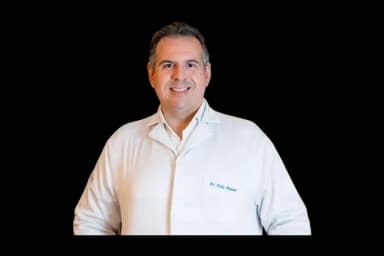
Dr. Helio Widson Alves Pinheiro
Pain Medicine | Acupuncture
CRM/PE 21167 | RQE 2217, 2808
Published on: January 17, 2026
Reviewed on: January 29, 2026
This content is informative and does not replace individual medical evaluation.
See full credentials
Fundador da Clínica Intrador, médico especialista em Medicina da Dor e Acupuntura, com atuação em tratamentos intervencionistas e neuromodulação.
Note: This content is for educational and informational purposes only. The information is based on scientific evidence and the clinical practice of the Intrador team, but it does not replace individualized medical evaluation. Conduct, indications, and treatments must be defined after medical consultation.
Clinical reviewer: Dr. Helio Widson Alves Pinheiro · Pain Medicine | Acupuncture · CRM/PE 21167 | RQE 2217, 2808
View full profile →