
Electroneuromyography (ENMG) in Recife
The exam that evaluates how nerves and muscles work to investigate pain, tingling, numbness and weakness — performed by a specialist physician, comfortably and without hospitalization.
First of all: it is a safe and calm exam
Many people arrive apprehensive, and that is understandable. In practice, electroneuromyography is an outpatient exam, well tolerated and without sedation: you have it done and go home right after, resuming your activities the same day.
There is, yes, a mild and brief discomfort — small electrical stimuli and the insertion of a very thin needle into the muscle — but it is short, and the physician guides each step explaining what is being done. No cuts, no stitches and no general anesthesia.
And it is well accepted in practice: in a prospective study, more than 95% of people completed both stages of the exam without difficulty.
Quick checker
Does my health plan cover electroneuromyography?
Type your plan name and see right away if we accept it.
What electroneuromyography is
Electroneuromyography (ENMG) is an exam that measures the electrical activity of nerves and muscles. It helps locate and characterize problems that cause pain, tingling, numbness, loss of strength or cramps — informing the diagnosis and guiding treatment.
The exam has two complementary stages: nerve conduction, done with electrodes on the skin surface and small electrical stimuli that measure nerve speed; and electromyography, with a thin needle that records muscle activity at rest and during contraction.
Types of electroneuromyography
The study is guided by the clinical suspicion — the physician defines its scope according to the symptoms:
Upper limbs (MMSS)
Arms and hands — common when carpal tunnel syndrome and upper-limb neuropathies are suspected.
Lower limbs (MMII)
Legs and feet — frequent in the investigation of sciatica, lumbar radiculopathy and polyneuropathies.
Four limbs
Broad study of all four limbs, indicated in diseases that affect nerves diffusely (e.g., diabetic polyneuropathy).
Complementary segment
Complement to a previous study, focusing on the specific segment or nerve that needs further detail.
Face
Assessment of the facial nerve and reflexes (e.g., facial palsy), with techniques specific to the region.
When the exam is indicated
ENMG is usually requested when facing symptoms such as:
- Tingling or numbness in the hands or feet
- Suspected carpal tunnel syndrome
- Pain radiating down the leg or arm (sciatica, radiculopathy)
- Muscle weakness or loss of strength
- Investigation of polyneuropathies (including diabetes-related)
- Paralysis or altered movement of the face
How to prepare
Preparation is simple:
- No fasting is needed — eat normally.
- Come with clean skin, without creams or moisturizers on arms and legs on the day of the exam.
- Tell the physician if you take anticoagulants or have a pacemaker/defibrillator.
- Bring previous exams and the medical request, if any.
- Prefer comfortable clothing that allows easy access to the limbs.
Safety and possible effects
Electroneuromyography is a low-risk exam. The effects are mild and temporary:
- Brief discomfort during the electrical stimuli and needle insertion.
- Possible sore feeling in the muscle for a few hours, similar to exercise.
- Small bruise at the needle site, uncommon and harmless — ultrasound studies show it is rare even in people taking anticoagulant or antiplatelet medication.
- There are no cuts, stitches or general anesthesia, and you resume activities the same day.
What the clinical evidence shows
Electroneuromyography is regarded as the reference exam to objectively assess the function of peripheral nerves and muscles: it confirms the diagnosis, helps localize the lesion and grades severity, complementing — not replacing — imaging studies. Here is what medical guidelines and studies indicate for the main indications:
Carpal tunnel syndrome
The joint practice parameter of the AANEM, the American Academy of Neurology (AAN) and AAPM&R recognizes median nerve conduction studies as a valid and reproducible exam to confirm the diagnosis and grade severity — information that guides management, including the pre-surgical decision.
Radiculopathy (sciatica and radiating neck pain)
Needle electromyography assesses whether the nerve root is functionally compromised — physiological information that complements MRI, which shows anatomy. It also helps distinguish root compression from other neuropathies that mimic the symptoms.
Polyneuropathies, including diabetic neuropathy
AAN/AANEM/AAPM&R guidelines position electrodiagnostic testing as the exam that confirms and characterizes polyneuropathy, distinguishing the lesion pattern (axonal or demyelinating) and the length-dependent involvement typical of diabetes.
Facial palsy
In selected cases of peripheral facial palsy, a recent systematic review indicates that electrodiagnostic assessment helps estimate the prognosis for nerve recovery and guide patient counseling.
Educational content based on guidelines and scientific studies; it does not replace a medical consultation. The indication and interpretation of the exam are always individualized.
Frequently asked questions
Does electroneuromyography hurt?
There is a mild, brief discomfort — small electrical stimuli and the prick of a thin needle — but it is short and well tolerated, without general anesthesia.
How long does the exam take?
Generally 30 to 60 minutes, depending on the scope (one limb, four limbs, face). The physician explains each step during the exam.
Do I need any special preparation?
No fasting is needed. Just come with clean skin, without creams on arms and legs, and report use of anticoagulants or a pacemaker.
Does my health plan cover it?
We accept SulAmérica, CASSI, Fisco and Luminar, among others. Use the checker above or talk to the team — coverage is confirmed in the eligibility check before scheduling.
Can I drive and work afterward?
Yes. The exam is outpatient, without sedation — you resume your activities normally the same day.
Scientific references
- American Association of Electrodiagnostic Medicine, American Academy of Neurology, American Academy of Physical Medicine and Rehabilitation. Practice parameter for electrodiagnostic studies in carpal tunnel syndrome: summary statement. Muscle & Nerve, 2002.
- Dillingham TR, Annaswamy TM, Plastaras CT. Evaluation of persons with suspected lumbosacral and cervical radiculopathy: electrodiagnostic assessment and implications for treatment and outcomes. Muscle & Nerve, 2020.
- England JD, Gronseth GS, Franklin G, et al. Practice Parameter: evaluation of distal symmetric polyneuropathy — role of laboratory and genetic testing (an evidence-based review). Neurology, 2009.
- Tesfaye S, Boulton AJM, Dyck PJ, et al. Diabetic neuropathies: update on definitions, diagnostic criteria, estimation of severity, and treatments. Diabetes Care, 2010.
- Petrides GA, Hayler R, Lee JW, Jankelowitz S, Low T-H. Electromyography in the prognostication of recovery in patients with acute peripheral facial nerve palsy: a systematic review. Clinical Otolaryngology, 2023.
- Lynch SL, Boon AJ, Smith J, Harper CM Jr, Tanaka EM. Complications of needle electromyography: hematoma risk and correlation with anticoagulation and antiplatelet therapy. Muscle & Nerve, 2008.
- Chang C-H, McClellan TM, Lopez KD, Wasser T, Hemtasilpa S. Tolerability of electrodiagnostic studies in patients: a prospective study. BMJ Neurology Open, 2024.
Have your electroneuromyography with a specialist
Exam performed by a specialist physician, with comfort and a careful report. Check your health plan and talk to our team.
Clinically Reviewed by:
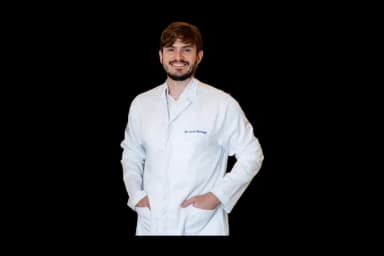
Dr. Lucas Marenga de Arruda Buarque
Neurology, Clinical Neurophysiology
CRM-PE 26954 | RQE 16230, 16667
Published on: 28/06/2026
Reviewed on: 28/06/2026
This content is informative and does not replace individual medical evaluation.
See full credentials
Médico neurologista com Área de Atuação em Neurofisiologia Clínica. Sua prática inclui investigação diagnóstica de dor neuropática e radiculopatias por meio de eletroneuromiografia (ENMG), apoiando o time multidisciplinar com avaliação funcional do sistema nervoso periférico.
Note: This content is for educational and informational purposes only. The information is based on scientific evidence and the clinical practice of the Intrador team, but it does not replace individualized medical evaluation. Conduct, indications, and treatments must be defined after medical consultation.
Clinical reviewer: Dr. Lucas Marenga de Arruda Buarque · Neurology, Clinical Neurophysiology · CRM-PE 26954 | RQE 16230, 16667
View full profile →