
Lumbar pain and glutes: a closer relationship than it seems
Lumbar pain is one of the main causes of limitation worldwide. What many people don't realize is that, in many cases, the lower back is "paying the bill" for a problem that starts elsewhere: the gluteal muscles.
The glutes (maximus, medius, and minimus) are fundamental for stabilizing the pelvis, the hip, and consequently, the lumbar spine. When they don't work well, the lower back tends to be more demanded — and may hurt.
The role of glutes in protecting the lower back
Among the functions of the glutes, the following stand out:
Stabilizing the pelvis when walking, running, climbing, and descending stairs;
Controlling hip position, avoiding excessive inclinations;
Helping with impact absorption from the lower limbs;
Working together with the core to protect the lumbar spine during daily movements and sports.
When these muscles are weak, deactivated, or working asymmetrically between sides, the lower back ends up having to compensate.
How glute weakness can generate lumbar pain?
Some common effects of weakness or incoordination of the gluteal muscles:
- increased anterior pelvic tilt (excessively "stuck out" butt);
- overload on lumbar spine joints;
- greater effort from lumbar paraspinal muscles, which become tense and painful;
- gait and running alterations, with poorly distributed impact.
This can manifest as:
- band-like pain in the lumbar region;
- sensation of heaviness or tiredness in the back when standing;
- pain when walking long distances or running;
- stiffness after long periods of sitting.
Other causes that add to glute weakness
Gluteal muscle weakness usually doesn't act alone. It combines with:
Sedentary lifestyle
or long periods sitting
Lack of core strengthening
Reduced hip mobility
Overweight
Abrupt increase in physical activities
without preparation
The sum of these factors facilitates the installation of recurrent lumbar pain episodes.
Treatment: why strengthening glutes is fundamental
In the conservative management of lumbar pain, strengthening glutes and core is one of the main pillars, alongside:
- movement re-education;
- structured stretching and mobility;
- posture and ergonomics adjustments;
- guidelines on daily activities.
Well-selected and progressive exercises help to:
- better redistribute loads between lumbar, hip, and lower limbs;
- reduce tension in paraspinal muscles;
- improve resistance and postural control.
Role of medical acupuncture
Medical acupuncture can assist in reducing lumbar pain, muscle tension, and regional irritability, allowing the patient to better participate in strengthening and rehabilitation, within comprehensive care.
Interventional treatments
In specific cases, when pain is chronic, intense, or associated with structural changes (such as facet arthrosis or symptomatic herniated disc), the pain specialist may consider:
- diagnostic and therapeutic blocks;
- radiofrequency procedures on selected spine structures;
- other minimally invasive interventions, always with criteria.
In summary
Not all lumbar pain is just "a spine problem". In many cases, the origin is in weak or poorly coordinated glutes, which leave the lower back overloaded.
Treating lumbar pain with quality means:
- looking at the spine,
- looking at the pelvis,
- looking at hips and glutes,
- and integrating everything into a care plan that recovers movement, strength, and confidence.
Back to Spine Pain
Explore other content about spine pain
Cervical Pain
Understand neck pain
Sports Injuries
Learn more about treatment for athletes
Talk with our team
If you have recurrent lumbar pain, our team can evaluate the function of your glutes and structure a complete and effective treatment plan.
Contact UsMeet Our TeamApproaches typically considered
For this condition, our team may consider one or more of the approaches below, from least to most invasive. The actual choice depends on individual clinical evaluation.
- Acupuncture
- Magnetic Stimulation (SIS)
- Nerve Blocks
- Image-Guided Block or Injection
- Radiofrequency
This list is informational. The effective indication depends on individual clinical evaluation, with criteria and limits discussed with you.
Clinically Reviewed by:
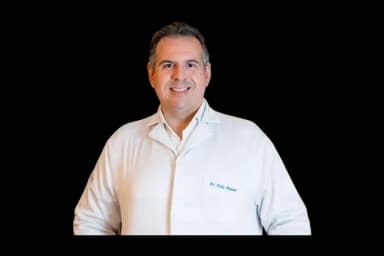
Dr. Helio Widson Alves Pinheiro
Pain Medicine | Acupuncture
CRM/PE 21167 | RQE 2217, 2808
Published on: January 17, 2026
Reviewed on: January 29, 2026
This content is informative and does not replace individual medical evaluation.
See full credentials
Fundador da Clínica Intrador, médico especialista em Medicina da Dor e Acupuntura, com atuação em tratamentos intervencionistas e neuromodulação.
Note: This content is for educational and informational purposes only. The information is based on scientific evidence and the clinical practice of the Intrador team, but it does not replace individualized medical evaluation. Conduct, indications, and treatments must be defined after medical consultation.
Clinical reviewer: Dr. Helio Widson Alves Pinheiro · Pain Medicine | Acupuncture · CRM/PE 21167 | RQE 2217, 2808
View full profile →