
Spinal Curvature Disorders: Kyphosis, Lordosis, and Scoliosis
The spine has natural curves that keep the body balanced. When these curves become exaggerated or the spine moves out of alignment, we speak of curvature disorders: kyphosis, lordosis, and scoliosis. Not every disorder causes pain, but some can be associated with back discomfort and deserve evaluation. This content is educational and does not replace a medical consultation.
It is important to separate two things: the disorder itself (the change in curve or alignment) and the pain that sometimes comes with it. Many mild disorders are asymptomatic and only require monitoring.
When associated back pain is present, the focus of treatment is usually to relieve discomfort and improve function, always with an individualized evaluation.
The Three Main Disorders
Each disorder affects a part of the spine in a different way. Below is a summary of each one — followed by a dedicated section for every type.
Kyphosis
Exaggeration of the upper-back curve (thoracic region)
Kyphosis is the natural curve of the upper back. When it becomes exaggerated, a "hunchback" or rounded-back appearance develops, which may be related to posture or to bone changes.
Learn more about kyphosisLordosis
Exaggeration of the lumbar or cervical curve
Lordosis is the natural curve of the lower back and neck. When it increases (hyperlordosis), the lower back becomes very arched — something that may be associated with low back pain in some cases.
Learn more about lordosisScoliosis
A sideways "S"- or "C"-shaped curve of the spine
Scoliosis is a sideways curve of the spine. It often appears in adolescence and varies widely in severity, from mild cases that are only monitored to cases that require specialist evaluation.
Learn more about scoliosis🟦 Kyphosis
Kyphosis is the natural curve of the thoracic spine (upper back), which gently rounds the back outward. When this curve becomes more pronounced than expected, a rounded-back or "hunchback" appearance develops. The cause may be postural (postural hyperkyphosis, common in young people) or linked to bone changes, such as osteoporosis in older adults.
Signs That Tend to Appear
- A rounded-back or "hunchback" appearance
- Shoulders pushed forward
- Tiredness or pain in the upper back
- Stiffness or tension in the back muscles
How It Is Usually Approached
The approach depends on the cause and the presence of pain. In postural cases, it usually involves guidance, physiotherapy, and strengthening of the back muscles. When there is associated pain, options such as medical acupuncture and trigger-point release may help selected patients. The approach is always individualized and defined during a consultation.
Frequently Asked Questions about Kyphosis
Does kyphosis always cause pain?
No. Many people with pronounced kyphosis do not feel pain. When discomfort is present, it is usually related to strain on the back muscles. A medical evaluation helps clarify the cause and whether treatment is needed in your case.
Can postural kyphosis improve?
In many cases of postural kyphosis, working on posture, strengthening, and body awareness can help reduce discomfort and improve function. Results vary from person to person and depend on an individualized evaluation.
🟩 Lordosis
Lordosis is the natural curve found in the lower back and neck, gently bringing these areas forward. When this curve becomes exaggerated, we speak of hyperlordosis: the lower back becomes very arched (a "deep" lower back). This may be related to postural factors, core weakness, and muscle strain, and in some cases is associated with low back pain.
Signs That Tend to Appear
- A very arched lower back ("deep" lower back)
- Belly and buttocks more pushed out
- Pain or tiredness in the lower back
- Tension in the lower-back muscles at the end of the day
How It Is Usually Approached
When hyperlordosis is associated with low back pain, the approach usually focuses on strengthening the core and stabilizing muscles, improving posture, and relieving discomfort. In selected patients, options such as medical acupuncture and myofascial release may complement the plan. Everything depends on an individualized medical evaluation.
Frequently Asked Questions about Lordosis
Is hyperlordosis the same as low back pain?
Not exactly. Hyperlordosis is the exaggeration of the lumbar curve; low back pain is a symptom that may or may not be present. In some cases they appear together, but the relationship needs to be assessed individually by a physician.
Does exercise help with hyperlordosis?
Strengthening the core and back muscles, along with postural correction, is often part of the plan in many cases and may help reduce discomfort. The indication and type of exercise should be defined with professional guidance.
🟧 Scoliosis
Scoliosis is a sideways curve of the spine, taking on an "S" or "C" shape when seen from behind, often with a slight rotation of the vertebrae. The most common form is adolescent idiopathic scoliosis, which appears during growth. Severity varies widely: there are mild cases that only need monitoring and more pronounced cases that require specialist evaluation.
Signs That Tend to Appear
- Shoulders or waist at different heights
- One side of the back more prominent when bending forward
- Hips that appear uneven
- In more pronounced cases, back discomfort
How It Is Usually Approached
The approach depends heavily on the degree of the curve and the age. Mild cases are usually only monitored; others may involve specific physiotherapy and, in selected situations, referral to a spine specialist. When there is associated pain, the focus of pain medicine is to relieve discomfort and improve function, always in an individualized way.
Frequently Asked Questions about Scoliosis
Does every case of scoliosis need surgery?
No. Most scoliosis cases are mild and do not require surgery, being only monitored or treated conservatively. The decision depends on the degree of the curve, the age, and the progression, and is assessed individually by a specialist physician.
Does pain medicine treat scoliosis?
Pain medicine does not correct the curve itself, but it can help control the back pain that sometimes accompanies scoliosis, in selected patients. Structural correction, when indicated, involves evaluation by a spine specialist.
When to Seek Medical Evaluation
Seek medical evaluation, more urgently in the presence of the signs below, especially in children and adolescents who are still growing:
- Asymmetry of the shoulders, waist, or hips that is progressing
- Persistent back pain that does not improve over time
- Numbness, tingling, or weakness in the legs
- A curve that seems to be increasing quickly
- Pain associated with fever or unexplained weight loss
Talk with our team
If you have a spinal curvature disorder with associated back pain, talk with our team for an evaluation with our pain specialists.
Pina Unit
Clinical Center Karla Patrícia, Av. Eng. Domingos Ferreira, 636 - Ground floor - Store 17 - Pina, Recife - PE, ZIP 51011-050
+55 (81) 3090-6003Aflitos Unit
Av. Conselheiro Rosa e Silva, 1206, Room 706 - Espinheiro, Recife - PE, ZIP 52020-220
+55 (81) 3072-9816Evaluation and Insurance
Care for spinal curvature disorders is individualized and, in many cases, multidisciplinary. Some evaluations and procedures may be covered by your health plan, according to your provider rules and the ANS list. Consult our team.
Approaches typically considered
For this condition, our team may consider one or more of the approaches below, from least to most invasive. The actual choice depends on individual clinical evaluation.
- Acupuncture
- Magnetic Stimulation (SIS)
- Nerve Blocks
- Image-Guided Block or Injection
- Radiofrequency
This list is informational. The effective indication depends on individual clinical evaluation, with criteria and limits discussed with you.
Clinically Reviewed by:
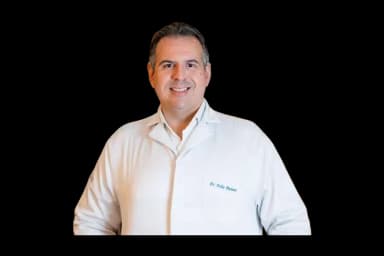
Dr. Helio Widson Alves Pinheiro
Acupuntura, Medicina da Dor
CRM-PE 21167 | RQE 2217, 2808
Published on: June 24, 2026
Reviewed on: June 24, 2026
This content is informative and does not replace individual medical evaluation.
See full credentials
Physician specializing in Acupuncture and Pain treatment, and Technical Manager of Intrador's two units. Graduated in Medicine from the Federal University of Pernambuco (UFPE) in 2007, he holds a Specialist Title in Acupuncture and a Certificate in Pain, both recognized by the Brazilian Medical Association (AMB).
Note: This content is for educational and informational purposes only. The information is based on scientific evidence and the clinical practice of the Intrador team, but it does not replace individualized medical evaluation. Conduct, indications, and treatments must be defined after medical consultation.
Clinical reviewer: Dr. Helio Widson Alves Pinheiro · Pain Medicine | Acupuncture · CRM/PE 21167 | RQE 2217, 2808
View full profile →